Cryogenic Perlite Insulation: A Practical Buyer's Guide
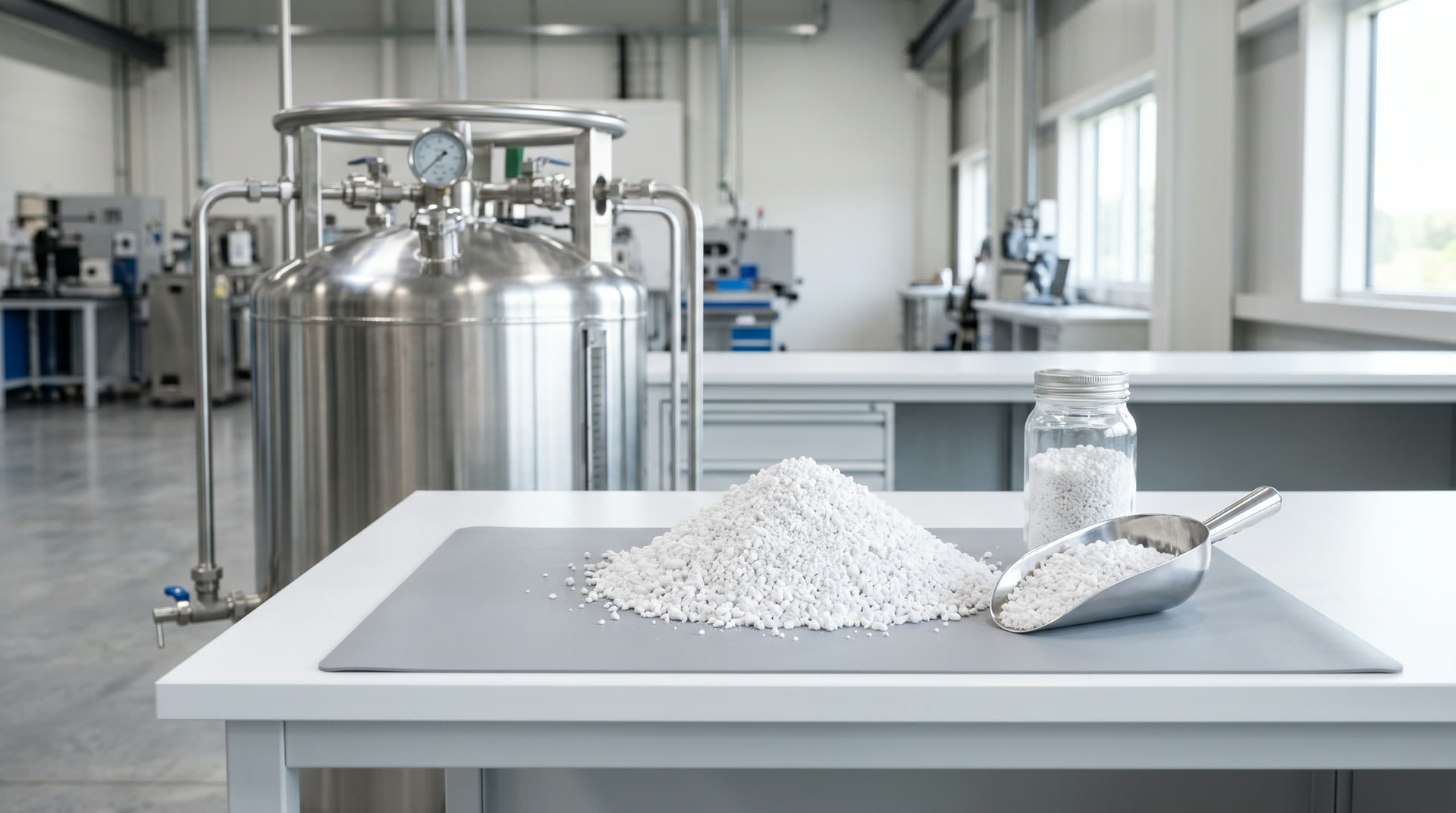
Cryogenic perlite insulation is expanded perlite, a lightweight volcanic glass, used to fill the annular space of cryogenic tanks and cold boxes, where it suppresses heat transfer between the warm outer shell and the cold inner vessel. Combined with vacuum, it is the most widely used insulation system in bulk liquid oxygen, nitrogen, argon and LNG storage because it is effective, non-combustible and economical. This guide explains what the material is, why it works, which quality criteria matter when choosing an expanded perlite supplier, and how tank filling is carried out.
What expanded perlite is
Perlite is a naturally occurring volcanic rock containing bound water. When crushed ore is heated rapidly to high temperature, the water flashes to steam and the particles expand many times their original volume, like mineral popcorn. The result is a white, extremely lightweight granular material full of closed and semi-closed cells. Those tiny cells are the insulation mechanism: they trap gas, break up convection and scatter radiant heat, giving the material very low thermal conductivity at a very low density.
Why it dominates cryogenic service
Several properties align unusually well with cryogenic equipment:
- Low thermal conductivity that improves further under vacuum, making perlite-vacuum systems standard on storage tanks.
- Completely non-combustible mineral composition, essential around liquid oxygen.
- Chemical inertness and no aging mechanism at cryogenic temperatures.
- Low density, so filling a large annular space adds little weight.
- Free-flowing granules that fill complex geometries around piping and supports.
- Cost far below alternatives such as multilayer insulation for large volumes.
Cold boxes in air separation plants, storage spheres and the annular spaces of flat-bottom and vacuum-insulated tanks all rely on it.
Grain size and density: the quality core
Not every expanded perlite is cryogenic grade. Horticultural and construction perlites follow different specifications and do not belong in a tank. For cryogenic use, the parameters that matter are:
Particle size distribution
Cryogenic grades use fine, controlled gradations. Too coarse and the packed bed insulates worse; too many fines and the material compacts, dusts heavily during filling and can migrate through the system. Ask for the sieve analysis and its tolerance band.
Bulk density after expansion
Density is the fingerprint of correct expansion, and cryogenic grades sit in a defined low-density window. Certificates should state loose and compacted density per batch.
Moisture content
Water is the enemy of both vacuum and thermal performance. Cryogenic perlite must arrive dry and stay dry, which makes packaging and storage part of the specification, not an afterthought.
A supplier who cannot document these three parameters per delivery is offering you a construction material, not a cryogenic insulation.
How tank filling works
Perlite installation is a specialist operation. For vacuum-insulated tanks, the annular space is filled through dedicated ports, with vibration or controlled settling techniques to achieve uniform density and avoid future voids. Settling matters because a poorly compacted fill can slump over years, leaving warm spots near the top of the vessel. On site, expansion and filling are sometimes performed together for very large tanks, with mobile expansion furnaces processing ore at the project location. After filling, vacuum-jacketed systems are evacuated, and the dryness of the perlite directly determines how fast and how deep that vacuum pump-down goes.
If your tank is due for re-insulation, or a new project needs both the material and the filling expertise, our team coordinates supply through the KAF Industries trade and sourcing group.
Buying checklist for cryogenic perlite
Specify cryogenic grade explicitly with sieve analysis, density window and moisture limit. Require batch documentation against that specification. Check packaging: sealed, moisture-protected bags or big bags appropriate for your filling method. Clarify logistics, since expanded perlite is voluminous and freight-sensitive, which is why delivered cost depends heavily on packing density and route planning. Finally, prefer a supplier who understands the application, because the difference between grades is invisible to the eye and very visible in your evaporation rate.
Material and service from one source
KAF Industries supplies cryogenic grade expanded perlite as part of its selected trading portfolio, and uniquely pairs it with the cryogenic tank expertise of our equipment team, which handles vacuum repair and re-insulation work. That combination covers the full need: the right material, correctly specified, plus the service capability to put it into your tank. Reach us through the international trade and sourcing group or the contact page for specifications and availability. Right product. Right source. Right solution.
Frequently Asked Questions
How often does perlite in a cryogenic tank need replacement?
Perlite itself does not age chemically and can serve for decades. Replacement is usually triggered by moisture contamination, settling voids or during major repairs when the annular space is opened. A vacuum and evaporation check tells you whether the insulation still performs.
Can horticultural perlite be used in a cryogenic tank?
No. Horticultural grades have coarser gradation, uncontrolled density and no moisture guarantee, all of which degrade vacuum and thermal performance. Always specify cryogenic grade with documented sieve analysis and density.
How is perlite quantity estimated for a tank?
From the annular space volume and the target installed density, plus an allowance for settling and losses during filling. Suppliers experienced in tank filling can calculate the required tonnage from your tank drawings.