Elliptical vs Torispherical Heads: How to Choose Correctly
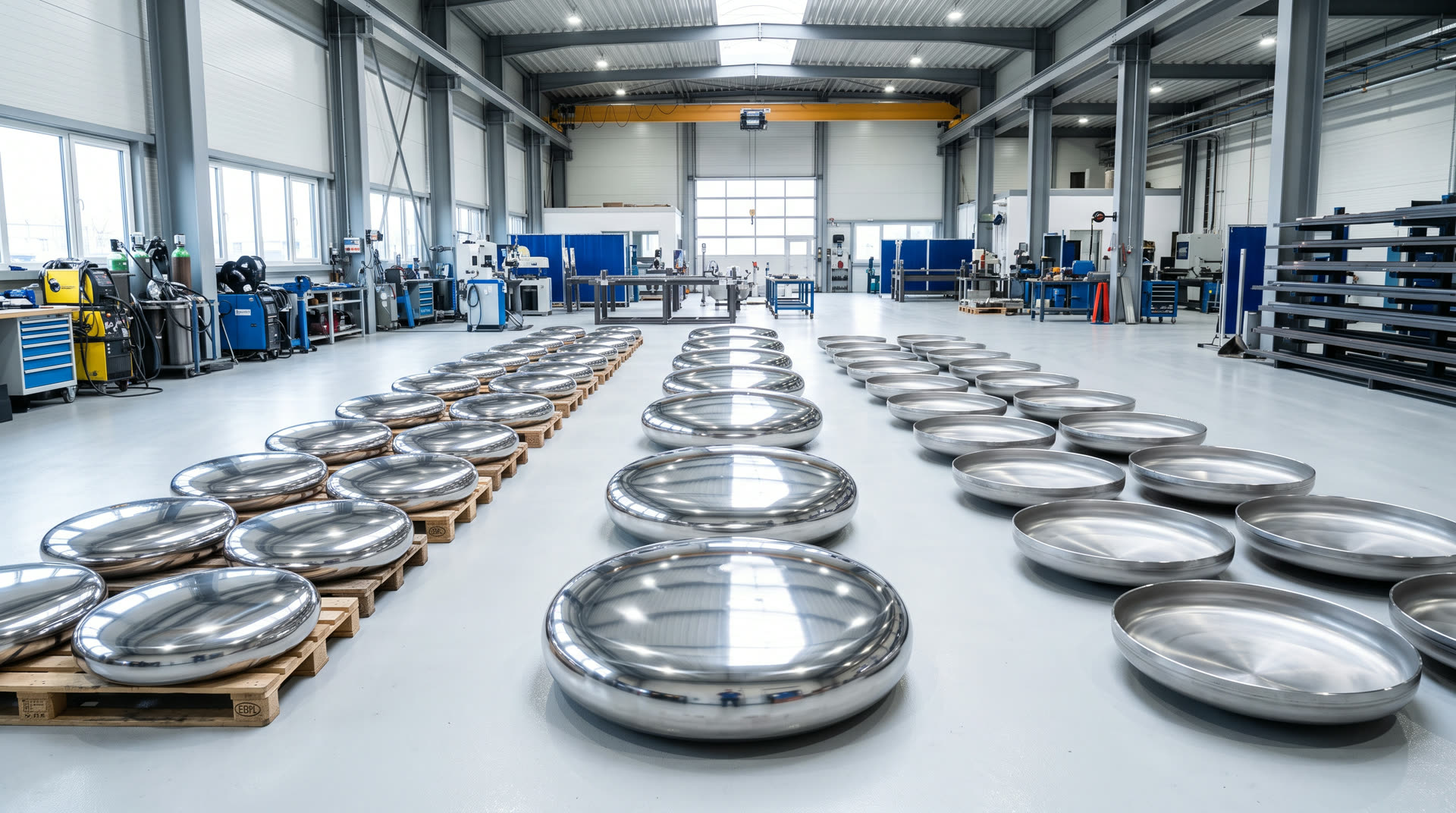
The difference between an elliptical head and a torispherical head lies in geometry: the elliptical head follows a semi-ellipsoidal curve, commonly with a 2:1 ratio, while the torispherical head combines a large spherical crown radius with a smaller knuckle radius at the rim. That geometric difference drives everything else, including pressure capacity, wall thickness, forming cost and typical applications. This guide explains both shapes and gives you a practical selection logic, along with how a qualified dished head supplier fits into the process.
The two geometries in plain terms
Torispherical heads
A torispherical head is dished from a flat plate into a shallow dome: a spherical central section with a defined crown radius, blended into the cylindrical shell by a knuckle with a much smaller radius. Standards such as DIN 28011 describe the common proportions. Because the shape is shallow, it needs less depth and less forming work, which makes it the economical default for low and moderate pressure equipment.
Elliptical heads
An elliptical head, described in references such as DIN 28013, approximates a semi-ellipse in cross-section, most commonly with the major axis twice the minor axis, the familiar 2:1 head. The curvature changes smoothly from crown to rim without the abrupt knuckle transition, which distributes stress more evenly across the head.
Pressure behavior and wall thickness
Under internal pressure, the torispherical knuckle is a stress concentration zone: the sharp change in curvature creates local bending stresses that limit the shape's efficiency. Design codes compensate with thickness, so as design pressure rises, torispherical heads demand disproportionately thicker plate.
The elliptical geometry spreads the load more smoothly, so a 2:1 elliptical head typically achieves the same pressure rating with less wall thickness than a comparable torispherical head. At low pressures the difference is minor and the cheaper torispherical forming wins. As pressure climbs, the material savings of the elliptical shape start to pay for its higher forming cost, and at genuinely high pressures the ellipse, or even a hemispherical head, becomes the rational choice.
Material use, forming and cost
Torispherical heads are shallower, so they consume slightly less plate per diameter and are simpler to form, especially in large diameters. Elliptical heads are deeper, require more forming capability from the manufacturer, and take more vertical space in the vessel layout, but repay this with thinner walls at higher pressure. Total cost therefore depends on the interplay of plate price, thickness, forming charges and the pressure the head must carry, which is why the same fabricator will choose differently on different projects.
Typical applications
Torispherical heads dominate atmospheric and low-pressure storage tanks, process vessels with modest ratings, transport tanks and equipment where depth is constrained. Elliptical heads are the standard on pressure vessels in the mid and upper pressure ranges, including air receivers, autoclaves, boilers, and cryogenic inner vessels, where their pressure efficiency and smooth stress profile justify the forming effort.
A quick selection logic: start from your design pressure and diameter, let the applicable design code set candidate thicknesses for both shapes, then compare delivered head prices at those thicknesses. If you would like that comparison run on a real specification, our team coordinates dished head production through the KAF Industries steel business group.
Quality and documentation matter as much as shape
Whichever geometry wins, insist on dimensional reports covering diameter, depth and local thinning after forming, material certificates to EN 10204 3.1 traceable to the plate, and, where the code requires it, heat treatment records. Thinning at the knuckle during forming is a classic weak point, and a competent manufacturer measures and documents it rather than leaving it to chance.
How KAF Industries fits in
KAF Industries is not a head manufacturer. We act as a coordinator of qualified production: matching your specification to vetted forming partners, sourcing certified plate including through our DKC Stainless mill direct channel, and managing dimensions, certification and delivery on a project basis. Send your head specification via the steel business group or reach us on the contact page for a coordinated offer. Right product. Right source. Right solution.
Frequently Asked Questions
Is an elliptical head always stronger than a torispherical head?
For the same thickness and diameter, the elliptical geometry handles internal pressure more efficiently because it avoids the knuckle stress concentration. However, a torispherical head designed to code with adequate thickness is equally safe. The difference is economics, not safety.
Can I replace a torispherical head with an elliptical one on an existing vessel?
Only through a proper engineering review, since depth, nozzle positions and code calculations all change. For new designs, the substitution question is best settled at the drawing stage, where it costs nothing to compare both options.
What information does a dished head supplier need for a quotation?
At minimum: inside or outside diameter, head type, wall thickness or design pressure with code reference, material grade, quantity and any requirements for surface finish, heat treatment and certification. A drawing accelerates everything, but a complete data sheet is enough to start.