Cryogenic Tank Vacuum Loss: Signs, Risks and Repair Options
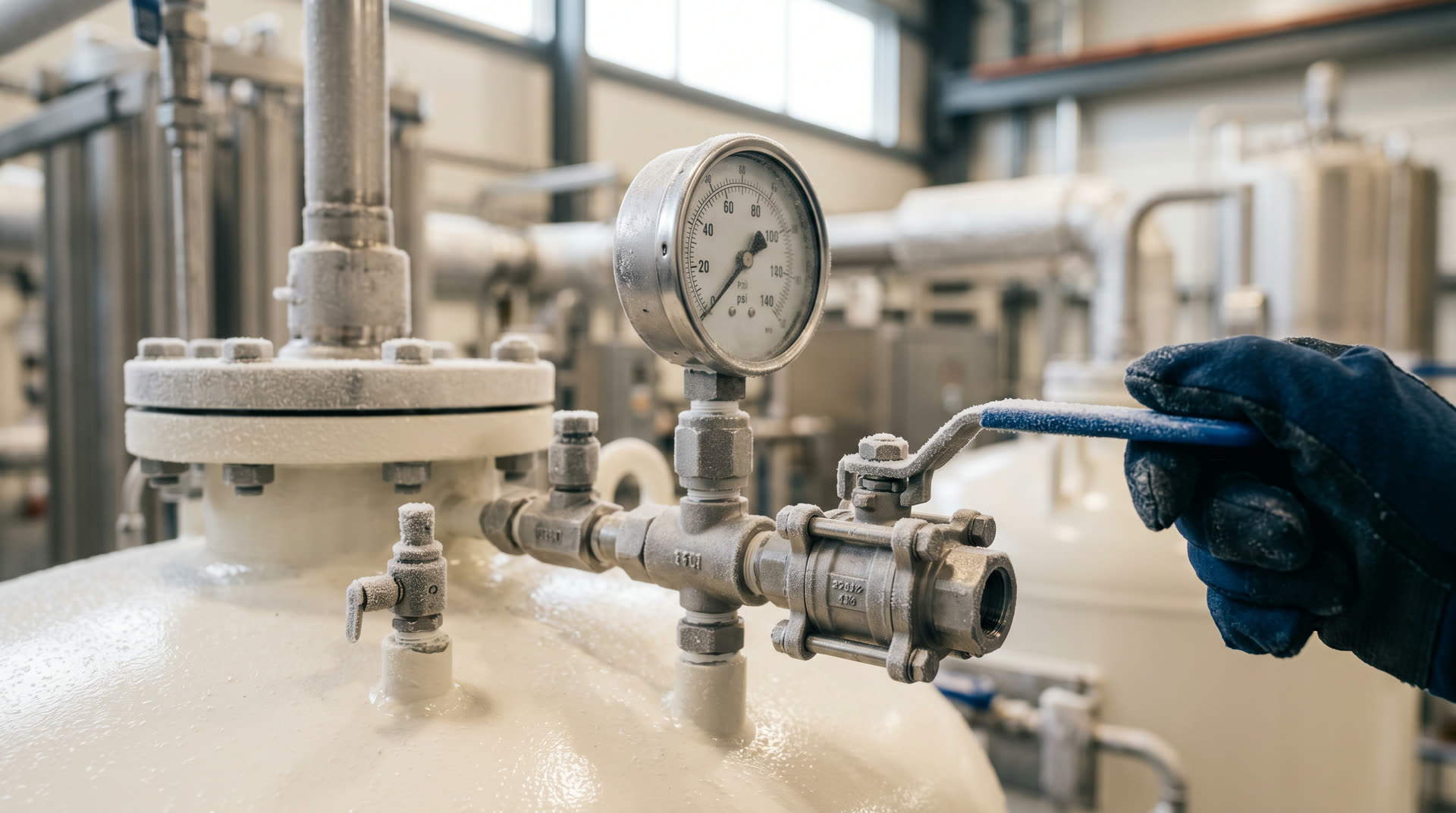
Vacuum loss in a cryogenic tank means the insulating vacuum between the inner vessel and outer shell has degraded, allowing heat to reach the stored liquid. The visible symptoms are condensation or frost on the outer surface, a rising evaporation rate and unexplained pressure build-up. Left untreated, vacuum loss turns into daily product losses and safety risks, but in most cases the tank can be restored through professional vacuum re-insulation rather than replaced.
How the vacuum insulation works
A cryogenic storage tank is essentially a giant vacuum flask. The inner vessel holds liquid oxygen, nitrogen, argon or CO2 at temperatures far below zero, while the annular space between inner and outer vessel is evacuated and usually filled with perlite or wrapped in multilayer insulation. The vacuum eliminates convective and conductive heat transfer. When that vacuum weakens, heat flows in, liquid boils off faster and the whole economics of your gas supply deteriorates.
Warning signs of cryogenic tank vacuum loss
Sweating or frost on the outer shell
The outer shell of a healthy tank stays at ambient temperature and dry. Cold spots, condensation patches or visible frost and ice on the shell mean heat is short-circuiting through the annular space at that location. This is the most recognizable field symptom.
Rising evaporation losses
Compare current boil-off with the tank's normal evaporation rate. If you refill noticeably more often at the same consumption, or the economizer and relief valves vent regularly, insulation performance has dropped.
Pressure rising faster than normal
Heat ingress raises the saturation pressure of the stored liquid. If tank pressure climbs quickly even during low consumption periods and relief valves lift repeatedly, treat it as a red flag and involve a specialist.
What is at risk if you wait
Every day of degraded vacuum costs you vented product, which is money released to the atmosphere. Frequent relief valve operation accelerates valve wear, ice build-up can block instrumentation and, in severe cases, sustained overpressure events create genuine safety exposure for personnel and neighboring equipment. Early intervention is almost always cheaper than late intervention.
If you observe any of these symptoms, our workshop team can assess the tank and quote a repair path through the KAF Industries cryogenics service program.
Diagnosis: confirming the problem
A proper diagnosis starts with a vacuum reading at the tank's measurement port, compared against the design value. Technicians then review evaporation data, inspect the shell for cold spots, and check whether the cause is a slow leak in the outer shell, outgassing of the insulation material or a fault around fittings and seals. This assessment determines whether the tank needs a simple re-evacuation or a fuller intervention.
The vacuum re-insulation process
Vacuum re-insulation is a workshop or on-site procedure with several stages. The tank is emptied, warmed and purged. Leaks in the outer jacket or around penetrations are located and repaired. Depending on the design and condition, perlite insulation may be replaced or dried. The annular space is then evacuated over an extended period with high-capacity vacuum pumps until the target vacuum level is reached and holds. Finally, the tank is tested, cooled down and returned to service with documented performance. A well-executed re-insulation restores evaporation rates close to original specification and extends the vessel's life by many years.
Repair, do not replace, when the economics allow
Because the inner vessel of most tanks remains structurally sound, cryogenic tank repair is usually far more economical than buying new. KAF Industries provides repair, maintenance and modification services for cryogenic tanks, including vacuum restoration, valve and instrumentation replacement and code-related documentation. Our team brings roughly 50 years of combined experience in cryogenic equipment to every assessment. Visit the cryogenics business group or contact us at the contact page to arrange an inspection. Right product. Right source. Right solution.
Frequently Asked Questions
How do I know if my tank has vacuum loss or just a valve problem?
Valve issues typically show as leaks or venting at a specific fitting, while vacuum loss shows as cold or frosted areas on the outer shell combined with rising boil-off across the board. A vacuum gauge reading gives the definitive answer, so ask a service provider to measure before ordering parts.
How long does vacuum re-insulation take?
Depending on tank size, insulation type and condition, the process typically takes from several days to a few weeks, with the extended pump-down phase consuming most of the time. Your supplier can often provide a rental tank to keep your operation running during the repair.
Is a tank with previous vacuum repair less reliable?
No, a professionally re-insulated tank with documented vacuum readings and test results performs comparably to its original specification. What matters is the quality of the repair and the documentation, not the fact that a repair took place.