CO2 Shortage Planning: A Supply Guide for Beverage Makers
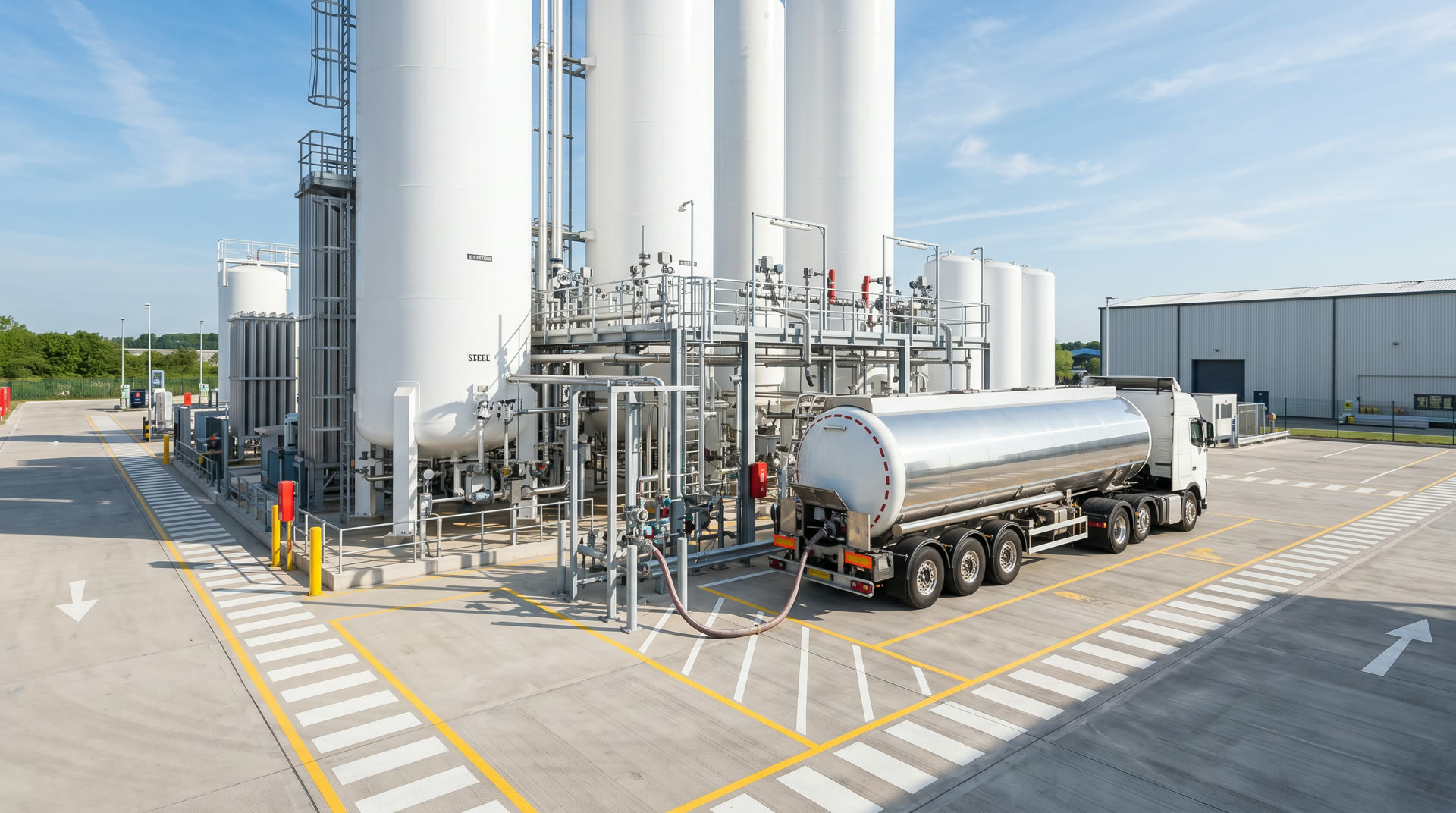
A CO2 shortage occurs when the industrial by-product plants that supply most carbon dioxide, above all ammonia and fertilizer facilities, cut output at the same time that seasonal demand peaks. For beverage producers the result is rationed deliveries, spot prices multiplying and, in the worst cases, stopped filling lines. The defense is not luck but a written supply plan built on four elements: a qualified second source, contractual protection, on-site buffer stock and early seasonal planning.
Why CO2 shortages keep happening
Most merchant CO2 is not produced for its own sake. It is captured as a by-product of ammonia production, hydrogen plants, bioethanol fermentation and natural sources. This creates a structural vulnerability: when high natural gas prices make ammonia production unprofitable, plants shut down and their CO2 disappears with them, regardless of how much the beverage industry is willing to pay.
The timing is often cruel. Ammonia plants schedule maintenance in summer, exactly when carbonated drink demand peaks. Add an unplanned outage or an energy price spike, and a regional market can tip from balanced to rationed within weeks. Producers in the Middle East, Europe and Central Asia have all experienced this cycle in recent years, and there is no reason to assume it will not repeat.
The four-part supply plan
1. Qualify a second source before you need it
The single most effective protection is a second, genuinely independent supplier whose CO2 comes from a different source plant, ideally a different feedstock or region. Qualification takes time: specification review, batch certificates, a trial delivery and internal approval. Do this work in the calm season, because during a shortage no serious supplier onboards new customers ahead of existing contract holders.
An international trading partner with access to multiple source plants across regions can shortcut this, which is exactly the role KAF Industries plays through its gases business group.
2. Put protection into your contracts
Spot buying is cheapest until the day it is unavailable. Review your supply agreements for committed volumes, allocation priority during force majeure, price adjustment mechanisms and notice periods. A slightly higher contracted price that guarantees allocation during a squeeze is inexpensive insurance for a business whose entire product line depends on carbonation.
3. Hold a realistic buffer stock
On-site CO2 storage is your shock absorber. Calculate how many days of production your current tank covers at peak consumption, and consider whether additional or larger storage is justified. Even a few extra days of autonomy converts a supply hiccup from a crisis into an inconvenience, and storage capacity also lets you accept opportunistic deliveries when product is available.
4. Plan the season early
Treat CO2 like agricultural buyers treat harvests. Before each summer, confirm volumes with suppliers, ask directly about planned maintenance at their source plants, pre-book peak season deliveries and update your escalation contacts. Suppliers reward customers who plan ahead with better allocation when things tighten.
What to do when a shortage hits anyway
If rationing starts despite planning, act on demand as well as supply: prioritize high-margin SKUs, check for recoverable CO2 losses in your process, and communicate honestly with customers about availability. In parallel, widen the sourcing radius. Product that is unavailable locally often exists two borders away, and a trading partner with international logistics can bridge the gap with cross-border bulk deliveries.
An international network as your insurance policy
KAF Industries is not a CO2 producer, and in a shortage that is precisely the advantage: we are not tied to one plant's fate. As an international supply partner we source food grade and industrial CO2 from qualified plants across multiple regions and arrange logistics into Turkey, the Middle East, Central Asia and Europe. Talk to us before the next tight season through our gases business group or the contact page. Right product. Right source. Right solution.
Frequently Asked Questions
How long do CO2 shortages typically last?
Shortages driven by seasonal maintenance usually resolve within weeks once plants restart, while shortages driven by energy prices can persist for months. Because duration is unpredictable, plans should assume an extended event, not a brief one.
Is on-site CO2 recovery a realistic alternative for a beverage plant?
For breweries and some fermentation-based producers, recovering CO2 from their own process is increasingly viable and reduces external dependence. For soft drink producers without a fermentation source, purchased CO2 remains the primary supply, which makes sourcing strategy the main lever.
How much extra should I pay for a guaranteed allocation contract?
There is no universal premium, and market conditions change quickly. Weigh the contract cost against the margin you lose in one day of stopped production. Framed that way, most producers find meaningful allocation guarantees easy to justify. Contact us for current terms.